Finding a hardscape company in Port Charlotte FL means looking beyond attractive patio photos to check relevant experience, installation practices, and a clearly written proposal. This article explains how to evaluate nearby contractors, prepare for consultations, and compare project scopes before choosing who will build your outdoor space.
A search for “hardscape landscaping near me” is a useful starting point, not a final recommendation. Use the results to build a shortlist, then ask each company to explain how it would approach your property and priorities.
How do you identify a reputable hardscape company nearby?
Identify a reputable hardscape company by verifying applicable credentials, checking insurance, reviewing comparable completed projects, and requesting detailed written estimates. Charlotte County recommends checking contractor qualifications and references rather than assuming an online advertisement establishes legitimacy. Its Citizen Access Portal provides access to contractor and permit records.
When reviewing results for “hardscape companies near me,” first confirm that the business serves your address in Port Charlotte FL. Ask whether it handles your intended project directly or subcontracts installation. Establish who will supervise the work and who will answer questions once construction begins.
Verify qualifications for the actual scope
Ask Charlotte County Community Development which licensing and permit requirements apply to your specific work, then verify the contractor accordingly. Requirements should not be inferred from a broad label such as “landscaper” or “hardscape specialist.” The county identifies Florida DBPR and its Citizen Access Portal as resources for checking licenses.
For concrete pavers, ask about current Concrete Masonry & Hardscapes Association installer certification. Treat certification as supporting evidence, not a guarantee: CMHA explicitly recommends carefully checking references because certification does not guarantee installation quality. Ask who holds the credential and whether that person will participate in your project
Check workmanship beyond the portfolio

Request references from both recent and older projects similar to yours. CMHA recommends reviewing comparable installations, verifying insurance and applicable licenses, and obtaining itemized proposals. An older project gives you an opportunity to ask the homeowner about follow-through after installation.
Use these questions to make reference calls worthwhile:
- Scope accuracy: Did the finished project match the agreed layout and materials?
- Communication: Were changes explained and approved before additional work began?
- Site care: How did the crew handle access, cleanup, and surrounding landscaping?
- Follow-through: If a problem appeared, how did the company respond?
Read reviews with those same questions in mind. Rather than relying only on star averages or a claimed BBB rating, look for specific accounts and verify any accreditation claim independently.
Match the company to the work you need
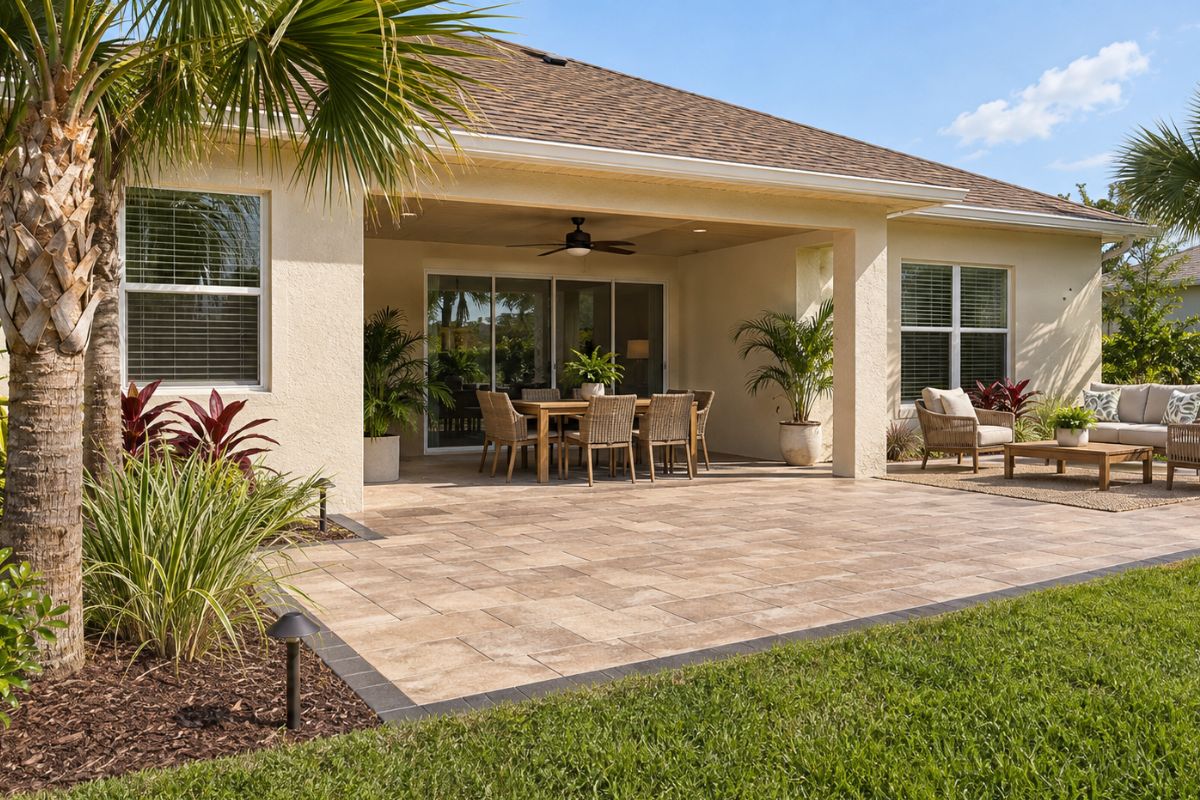
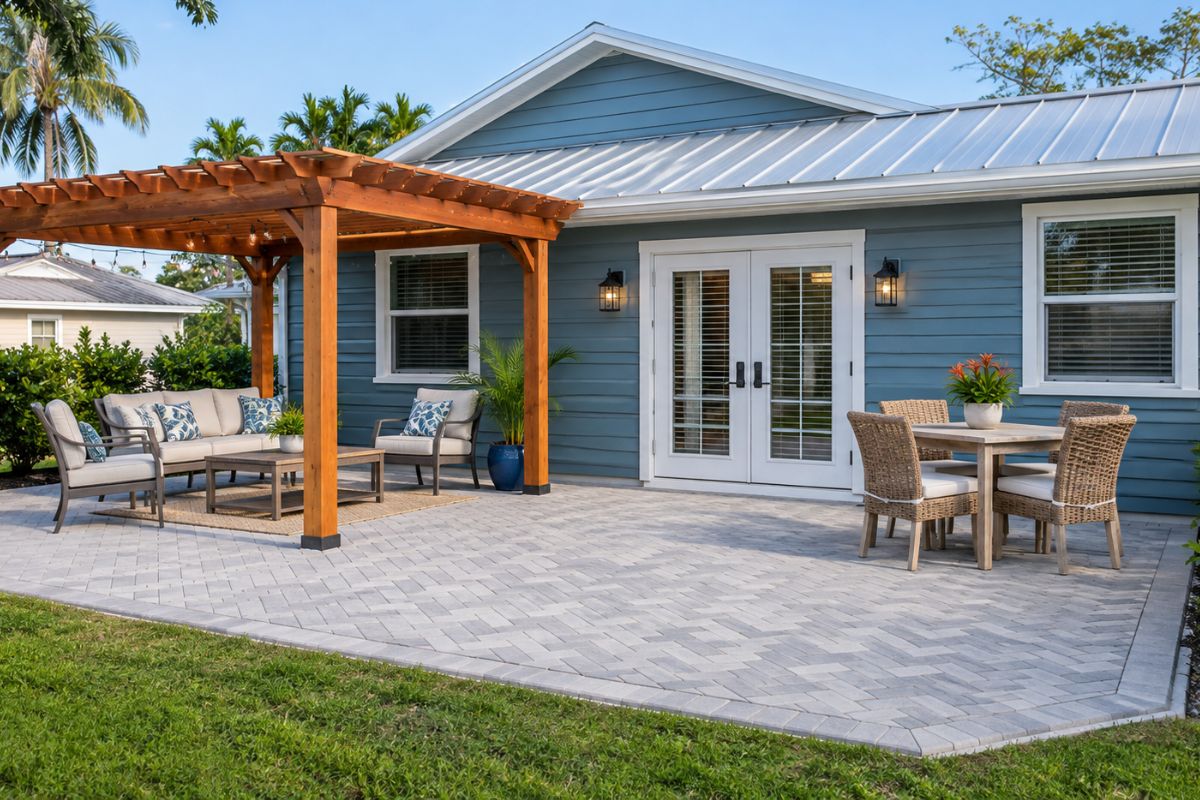
Start consultations with a description of how you want to use the space, not just a preferred paver color. Consider whether you need a dining patio, a route from the driveway to the entrance, or a more coordinated backyard layout. Hardscape product systems include options for patios, walkways, pool decks, driveways, and retaining walls, but ask each contractor which applications it actually installs.
For your shortlist, distinguish planting and maintenance needs from construction needs. If your plans combine paving with irrigation changes, planting beds, or lawn restoration, ask how those responsibilities will be coordinated. Searches for “landscape and hardscape companies near me” can help you identify candidates, but confirm the complete scope rather than assuming every company offers everything.
Ask providers of hardscape design services to explain their deliverables. Will you receive a dimensioned layout, material selections, elevations where needed, or only a visual concept? Establish how many revisions are included and whether the design can be priced before you commit to construction.
For walls, substantial grade changes, or work affecting structures, ask whether your project needs a landscape architect, engineer, or additional specialist. Confirm required documentation with the county; its plans review covers building-code compliance as well as zoning, drainage, and floodplain regulations.
Plan around the property, not just the paving
For a project in Port Charlotte FL, make drainage a discussion item before approving the layout. Ask the contractor to show existing water movement, proposed surface elevations, and where runoff will go. Charlotte County’s grade-and-fill application checklist calls for existing and proposed drainage elevations when that permit applies.
Walk the yard with each estimator. Point out puddles you have observed, downspout outlets, irrigation equipment, doors, and areas you want protected. Bring photographs taken after rain if you have them, and ask how the proposed work accounts for those observations.
Discuss comfort as carefully as appearance. Ask to view material samples outdoors, consider how the intended area feels in direct sun, and request product information about wet-use suitability around pools. Avoid choosing solely from a small showroom sample or assuming that two similar-looking products perform identically.
For paver work, request an explanation of excavation, subgrade preparation, base construction, edge restraints, and drainage. CMHA installation guidance addresses these underlying construction details; they deserve attention alongside surface patterns and colors. Ask the contractor to identify the manufacturer guidance and installation specifications included in its proposal.
What should you prepare before a hardscape consultation?
Prepare a short project brief with your intended uses, approximate dimensions, preferred appearance, budget range, and known property concerns. Ask each company to inspect the site before issuing its final proposal. CMHA’s contractor-selection guidance recommends site visits and written proposals from at least three contractors.
Give every estimator the same information so you can compare approaches fairly. Explain your must-haves separately from optional additions, and identify any deadline as a preference until the contractor confirms feasibility. Ask whether the consultation, drawings, revisions, and estimate carry separate charges rather than assuming they are free.
Bring this compact checklist:
- Purpose and layout: Note furniture, walking routes, and space needed around doors or gates.
- Property information: Gather an available survey, existing plans, and relevant association requirements.
- Site concerns: List standing water, difficult access, roots, utilities, and features to preserve.
- Budget priorities: Separate essential construction from decorative upgrades or later phases.
- Project logistics: Discuss material storage, equipment access, working hours, and household access.
- Decision responsibilities: Identify who approves materials, layout changes, and additional costs.
Before the meeting ends, ask the estimator to summarize the proposed approach in plain language. You should understand what is included, what remains unresolved, and when a written proposal will arrive. If two contractors recommend different solutions, ask each to explain the site conditions behind that recommendation.
Pair a Palm tree or two on the sides to make it look beautiful! Learn about the benefits of choosing palm trees!
Compare proposals by scope before price
When evaluating “hardscape installation near me,” request enough detail to understand exactly what each price covers. Charlotte County advises obtaining detailed written estimates and a signed contract covering critical project terms. Its consumer guidance also recommends confirming permit requirements with the county when you are unsure.
Build a side-by-side comparison using these categories:
- Design and materials: Dimensions, product names, colors, patterns, borders, and approved substitutions.
- Preparation: Demolition, excavation, disposal, base materials, and site-specific drainage work.
- Administration: Design fees, applicable permits, inspections, and responsibility for obtaining approvals.
- Execution: Expected schedule, supervision, access arrangements, cleanup, and landscape restoration.
- Payment and protection: Payment milestones, written change approvals, workmanship terms, and exclusions.
Use the comparison to expose missing information, not simply to select the lowest total. CMHA cautions that the lowest bid is not necessarily the best option and recommends itemized proposals covering scope and payment terms. Ask contractors to clarify omissions before treating their prices as comparable.
There is no useful project price to promise without a defined design and site assessment. Instead, ask each bidder to separate the core installation from optional features. If the proposal exceeds your budget, request a smaller layout or phased alternative with preparation and drainage requirements preserved.
Choose clarity over the strongest sales pitch
Your search for the “best hardscape companies near me” should end with a contractor whose proposed work you understand—not simply the most persuasive presentation. Before signing, make sure the drawings, material choices, exclusions, and communication arrangements reflect your conversations. Resolve unclear answers in writing rather than relying on assumptions.
For homeowners in Port Charlotte FL, a practical next step is to shortlist three relevant companies and arrange comparable site consultations. Bring the same brief to each meeting, verify qualifications, and compare complete proposals. Choose the team that explains both the finished space and the work required to build it.
Q&A
Question: Why is an online search not enough to choose a hardscape company?
Short answer: Search results can help you build an early shortlist, but they do not prove that a company is right for your project. The article recommends checking credentials, insurance, references, similar finished work, permit rules, and written proposal details before you choose.
Question: How many hardscape contractors should homeowners contact before choosing one?
Short answer: The article recommends comparable site visits and written proposals from at least three contractors. Giving each contractor the same project brief helps us compare their work fairly. This includes scope, materials, drainage planning, schedule, payment terms, and exclusions.
Question: What should be included in a strong hardscape proposal?
Short answer: A strong proposal should list dimensions, product names, colors, patterns, borders, substitutions, preparation work, drainage details, permit duties, schedule, supervision, cleanup, payment milestones, written change approval steps, workmanship terms, and exclusions. The goal is to compare complete scopes, not just total prices.
Question: Why is drainage especially important for a Port Charlotte FL hardscape project?
Short answer: Drainage affects whether the finished patio, walkway, driveway, or wall works well over time. The article advises discussing existing water flow, proposed surface heights, runoff direction, downspouts, puddles, and any grade-and-fill permit requirements before approving the layout.
Question: Does installer certification guarantee a quality paver installation?
Short answer: No. The article says Concrete Masonry & Hardscapes Association certification can support a contractor's credentials, but it is not a guarantee of installation quality. Homeowners should still check references, review similar projects, verify insurance and licenses, and confirm who will actually take part in the work.