Shopping for palms is easier when you know which local seller fits your project. Small patio palms, privacy screens, and large specimen palms are often sold through different channels. So the best place to start depends on your climate, budget, and how much planting help you need. This guide shows where to find palm trees for sale near you, how to compare stores, and what to ask before you bring a palm home.
Where should you buy palm trees near you?
The best place to buy palm trees near you is often a local nursery if you want climate-specific advice, a regional tree farm if you need large palms, or a garden center if you want a small container palm fast.
Before you buy, check the palm's mature size, hardiness, sun needs, delivery options, and whether the seller can give planting help for your area.
When people search for palm trees near me or where to buy palm trees near me, they are often weighing speed against know-how.
A big-box garden center may be fast and cheap for a small windmill palm or pygmy date palm. An independent nursery may help you avoid a poor fit for your soil, salt, winter cold, or yard size.
The main local store options for palm buyers
Independent nurseries and garden centers
Independent nurseries are often the best first stop for homeowners who want local palm trees that suit nearby conditions.
A good nursery can explain which palms handle your winter lows, coastal winds, sandy soil, shade, or heat from pavement. They may also offer types that chain stores do not carry.
For example, Two Oaks Nursery in Ocean Isle Beach, North Carolina, says its plants are hand-picked for the local climate and offers palms, trees, shrubs, consultations, and planting help. That kind of local knowledge is useful when you want a tropical look in an area where cold snaps, salt, or deer pressure may affect plant choice. (twooaksnursery.com)
Regional palm farms and specialty growers
If you are searching where to buy large palm trees near me, specialty growers and tree farms are often better than general stores.
These sellers may work with landscapers, resorts, and homeowners who need instant height or a matched group of palms. They are also more likely to talk about truck access, root ball handling, and support.
Bigger palms are not just plants; they need truck room, proper depth, support, and early watering.
Palmco in Florida, for instance, says it is wholesale only and has hundreds of acres in palm production. Its buying guide stresses mature size, climate, and sunlight. Those are key points before you install a palm that may one day tower over a roof or utility line. (palmco.com)
Multi-location nursery chains
Large nursery chains can help if you want a wide selection plus delivery or planting services.
Moon Valley Nurseries lists stores across several U.S. states and says it sells trees and handles planting. That can work well for homeowners who want one vendor for the whole job.
As with any big landscape buy, compare written quotes, warranty terms, and follow-up care before you commit.
Home improvement stores and online garden centers
Home improvement stores can be handy when you are asking where to buy small palm trees near me.
They often carry container palms that you can pick up, ship, or have delivered, depending on the item and your location. The Home Depot palm category, for example, lists windmill palm, queen palm, pygmy date palm, and other container-grown palms, with filters for mature height and hardiness zone. (homedepot.com)
This route works best when you already know what you want and can check that the palm fits your climate.
If the plant tag gives only basic care details, call your local Extension office or a trusted nursery before you plant it.
Which palm size fits your landscape?
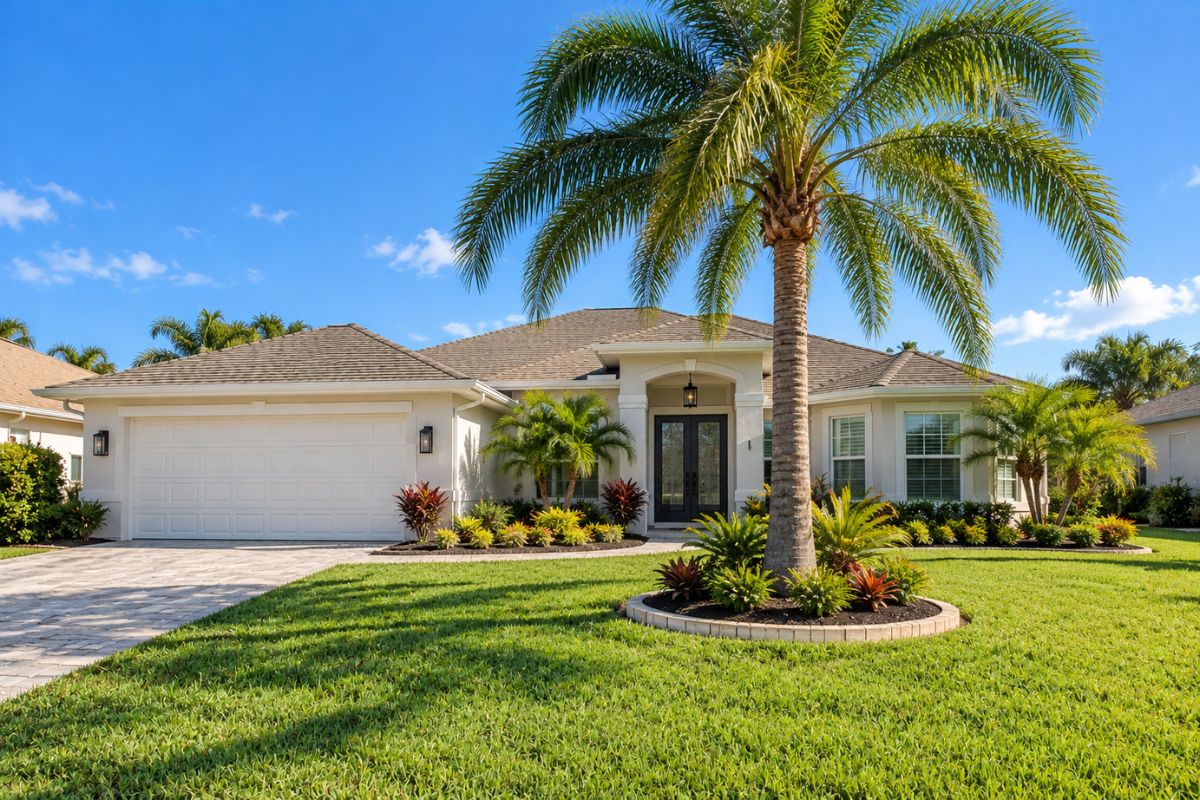
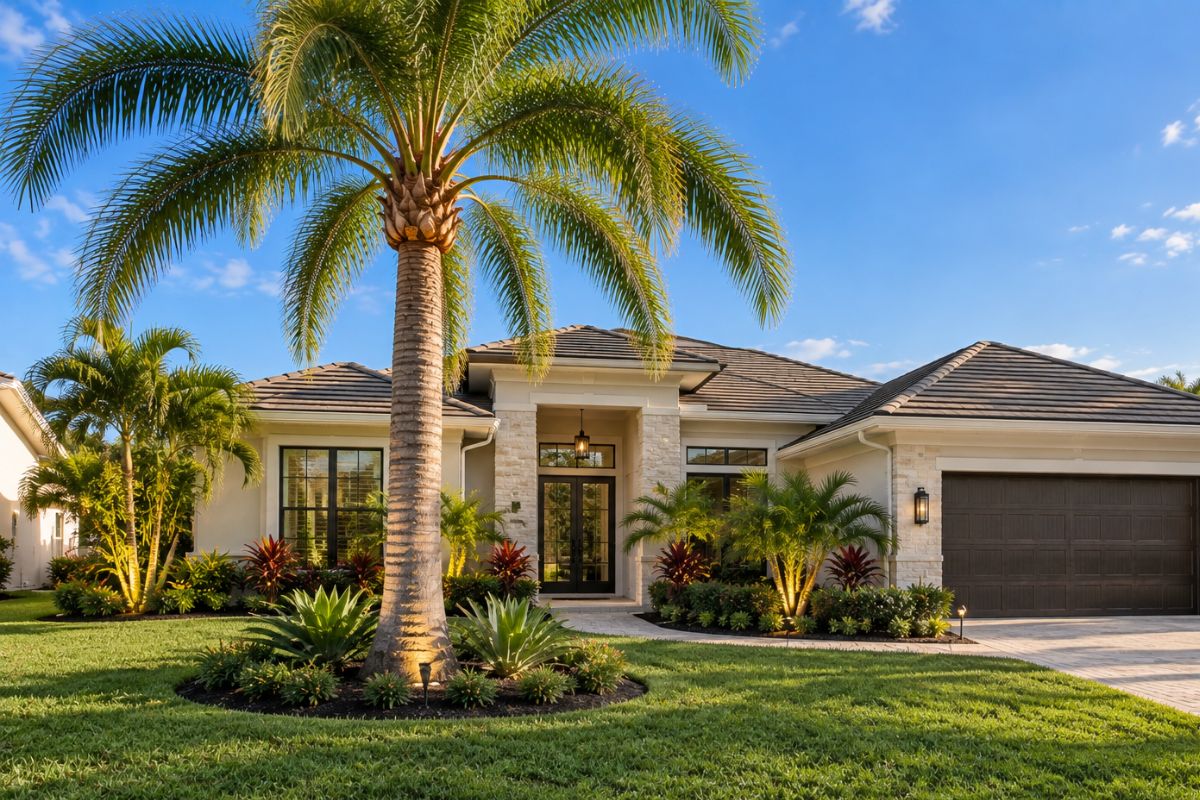
The right palm size depends on the job. Small palms fit patios and tight beds. Medium cluster palms can add privacy. Large palms work best as focal points, but only if they have enough overhead and root space.
Do not buy for the height you see in the store. Buy for the mature size and for the care the palm will need later.
Small palms are ideal near entries, pools, courtyards, and shaded corners. Pygmy date palm, lady palm, and dwarf palmetto-style picks can add texture without crowding a walkway. They are also easier to move and plant.
Medium palms are useful when you want screening or layered green. Areca palm is often used in warm areas as a clustering screen. Lady palm can work in protected shade where a softer, multi-stem look is better. Fishtail palm has a bolder leaf shape and can make a strong screen where the climate fits.
Large palms make the biggest visual impact, but they need the most planning. Check mature height and spread, then look at power lines, roof overhangs, septic fields, pool cages, and narrow side yards. A palm that looks right in a nursery row may feel too large beside a one-story home.
The best palm varieties for common goals
For privacy, look for palms that make multiple stems or that can be planted in a staggered row. Areca palm, lady palm, and other clustering palms can soften fences and make a lush backdrop, but they still need room so air can move through the bed.
Crowding palms too close may give fast cover at first, then cause care problems later.
For a compact look, choose palms with neat habits and a mature size that stays in scale. Pygmy date palm and lady palm are common picks for smaller landscapes, though cold care and site choice still matter.
In cooler coastal or in-between climates, windmill palm is often used because it is one of the more cold-hardy palms and can add a tropical look to temperate yards. (plants.ces.ncsu.edu)
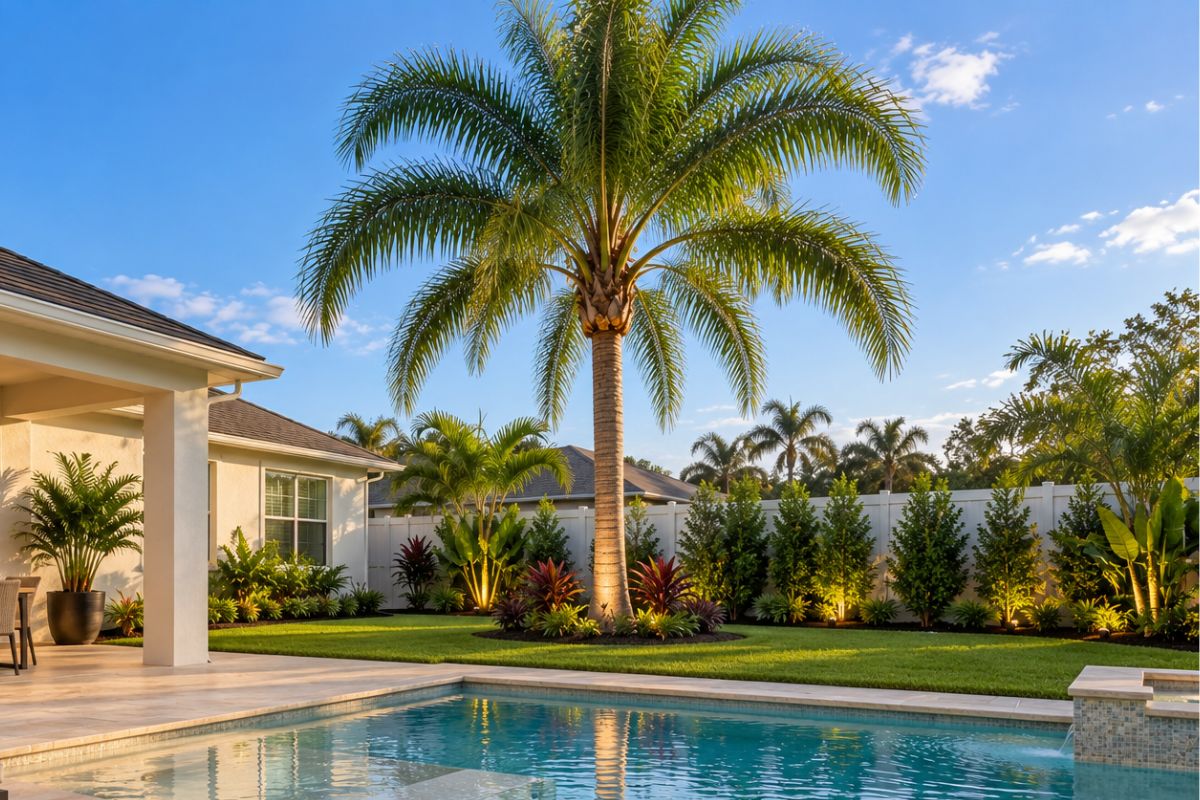
For a bold focal point, think about upright palms with strong trunk shape and enough room to grow. Queen, royal, Bismarck, and date-type palms can change a front yard or pool area, but they should be picked with pro input if you are buying mature plants.
A smart checklist before you visit local stores
Bring a few details before you visit stores with palm trees for sale. The more clear you are, the easier it is for a nursery to steer you away from a palm that looks good now but struggles later.
- Your ZIP code or USDA hardiness zone: This helps narrow down cold tolerance.
- Sun exposure: Note full sun, afternoon sun, filtered shade, or deep shade.
- Planting space: Measure bed width, distance from the house, and overhead clearance.
- Soil and drainage: Palms do not like wet, packed soil.
- Purpose: Decide whether you need privacy, shade, a container accent, or a focal point.
- Installation plan: Ask whether you need delivery, planting, support, or equipment access.
- Care support: Ask for watering and fertilizer steps in writing.
How do you plant and care for a new palm?
Plant a new palm at the same depth it grew in the pot or field. Water it well after planting, add mulch in a light layer, and keep the root ball evenly moist while it settles in.
University of Florida guidance says to dig a hole that fits the root ball with room for new growth. It also says to backfill with the same soil you dug out, add 2 to 3 inches of organic mulch, water often during the first stage, and use palm fertilizer after the move when it makes sense. (sfyl.ifas.ufl.edu)
Avoid the common mistake of planting too deep. Palms can decline when the root zone does not get enough air, and deep planting can lead to nutrient and root issues.
If you are installing a large palm, ask the seller how it should be supported and for how long. UF/IFAS notes that large palms may need support during the first few months, but nails should not go into the trunk. (sfyl.ifas.ufl.edu)
Fertilizer matters because palms often need nutrients that standard lawn products may not give in the right mix. UF/IFAS recommends palm fertilizers with slow-release nitrogen, potassium, and magnesium, plus micronutrients such as manganese, iron, zinc, copper, and boron. (sfyl.ifas.ufl.edu)
Buying local palms without regret
The best local palm purchase is not always the tallest or cheapest plant on the lot. It is the palm that fits your climate, your space, your care style, and your planting budget.
Start with good local nurseries, compare specialty growers if you need large specimens, and use home improvement stores for smaller palms when you can confirm the plant's long-term fit.
If you still wonder where to buy palm trees near me, visit two or three sellers before you decide.
Take photos of your planting area, ask the same questions at each stop, and pick the store that gives clear answers about mature size, climate fit, delivery, planting, and care.
A little extra research before you buy can save years of pruning trouble, transplant stress, and disappointment.